The clocks change in 2026 on Sunday, Nov. 1, when most of the United States ends daylight saving time and returns to standard time. At 2 a.m. local time, clocks move back one hour, extending morning daylight while shortening evenings, according to federal timekeeping rules that have governed seasonal clock changes for decades.
When Do the Clocks Change in 2026
| Key Fact | Detail |
|---|---|
| Date clocks change | Sunday, Nov. 1, 2026 |
| Time of change | 2:00 a.m. local time |
| Adjustment | Clocks move back one hour |
| Applies to | Most U.S. states |
Unless Congress acts to change federal law, the clocks change in 2026 will proceed as planned, extending a long-running system that remains widely observed, scientifically debated, and politically unresolved across the United States.
When Daylight Saving Time Ends in 2026
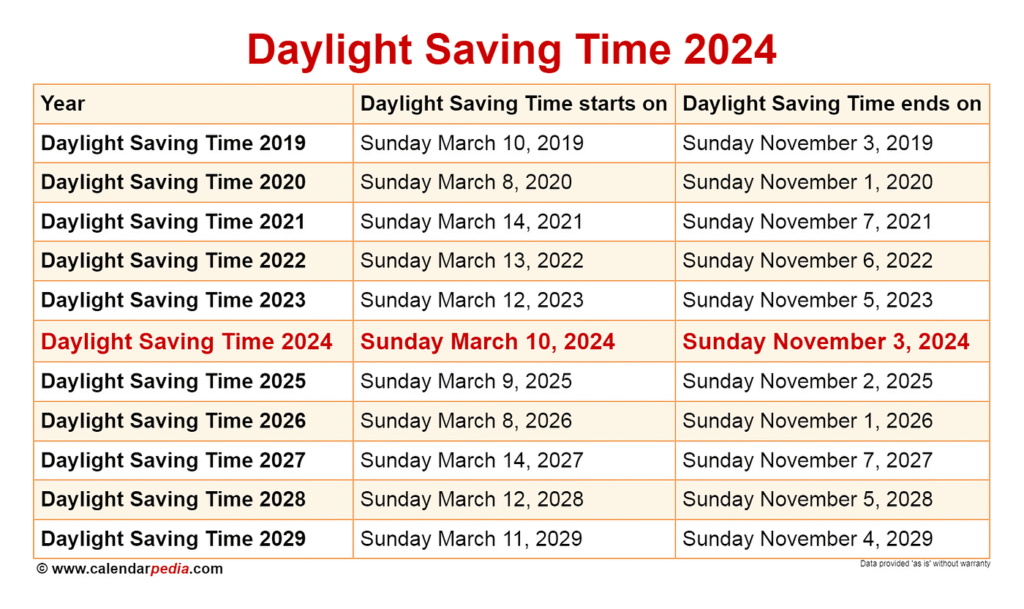
In 2026, the DST end occurs on the first Sunday in November, continuing a schedule that has been in place since 2007. At exactly 2:00 a.m., clocks are set back to 1:00 a.m., effectively repeating one hour and shifting the nation back onto standard time.
The timing is not arbitrary. Federal regulators selected the early-morning hour to minimize disruption to transportation schedules, broadcasting operations, and daily commerce. By making the change overnight, most Americans experience the shift while asleep.
The phrase “fall back” has become shorthand for the change, distinguishing it from the spring transition that advances clocks forward. While many digital devices now adjust automatically, the legal observance still hinges on precise timekeeping standards maintained by federal agencies.
According to the U.S. Department of Transportation, the agency responsible for overseeing time observance, daylight saving time remains the default system unless states formally opt out.
Why the Clocks Change in the First Place
Daylight saving time has roots in energy conservation efforts dating back more than a century. The United States first adopted the practice nationally in 1918 during World War I, aiming to reduce fuel consumption by maximizing daylight hours for industrial work.
After years of inconsistency, Congress passed the Uniform Time Act of 1966, creating a nationwide framework for time zones and seasonal clock changes. The law allowed states to exempt themselves from daylight saving time but required national uniformity where DST was observed.
The modern schedule was extended under the Energy Policy Act of 2005, which lengthened daylight saving time by about four weeks starting in 2007. Lawmakers argued the extension would reduce electricity use, improve road safety, and stimulate retail spending during longer daylight evenings.
Subsequent studies have challenged some of those assumptions. Research reviewed by the National Institute of Standards and Technology suggests energy savings are modest and vary significantly by region, climate, and household behavior.
Where the 2026 Time Change Does Not Apply
Not all parts of the United States observe daylight saving time.
Hawaii and most of Arizona remain on standard time year-round, citing geographic location and climate as reasons for opting out. Hawaii’s proximity to the equator results in minimal seasonal daylight variation, while Arizona officials have long argued that extended evening sunlight exacerbates extreme heat.
Several U.S. territories also do not observe daylight saving time, including Puerto Rico, Guam, the U.S. Virgin Islands, and American Samoa. These regions follow local time standards aligned with their geographic and economic needs.
In recent years, multiple states have passed laws expressing intent to adopt permanent daylight saving time if Congress authorizes it. However, under existing federal law, states cannot move permanently to DST without congressional approval.
Health, Safety, and Economic Effects
Health researchers generally view the fall transition as less harmful than the spring shift, which shortens sleep by one hour. Even so, experts say the adjustment still affects circadian rhythms, particularly for older adults and shift workers.
“Any sudden change in light exposure and sleep timing can have short-term physiological effects,” said Dr. Beth Ann Malow, a sleep specialist at Vanderbilt University Medical Center, in prior public briefings. She noted that the fall change may slightly improve sleep duration but does not eliminate disruption entirely.
Traffic safety data analyzed by the National Highway Traffic Safety Administration shows mixed effects. Morning crash rates often decline after fall back due to increased daylight during commute hours, while pedestrian accidents may rise in the evening as darkness arrives earlier.
Economists have also studied the impact on consumer behavior. Retail associations report that earlier sunsets can reduce foot traffic in some sectors, while utility providers note slight increases in evening residential electricity use during the weeks following the change.
How the U.S. Compares With Other Countries
The United States is not alone in observing daylight saving time, but global practices vary widely.
Most European countries also shift clocks seasonally, though they typically end daylight saving time on the last Sunday in October, about one week earlier than the U.S. The European Union has debated eliminating clock changes entirely but has not implemented a unified policy.
Countries near the equator generally do not observe daylight saving time, as daylight hours remain relatively consistent year-round. Others, including Japan, China, and India, have chosen not to adopt the practice due to limited benefits.
These international differences can complicate global travel, financial markets, and communications during the weeks when clocks are out of sync across regions.
Technology, Infrastructure, and Timekeeping Accuracy
Modern time changes rely on highly precise systems.
The National Institute of Standards and Technology maintains atomic clocks that define official U.S. time to the nanosecond. These signals synchronize telecommunications networks, financial systems, GPS satellites, and internet servers.
While most smartphones, computers, and connected appliances adjust automatically, legacy systems still require manual updates. Transportation authorities and hospitals often conduct advance checks to ensure scheduling systems reflect the correct time.
Cybersecurity experts warn that outdated systems failing to account for time changes can experience data errors, billing discrepancies, or service interruptions, though such incidents have become less common.
Will Daylight Saving Time Ever End?
The debate over ending clock changes has intensified in Congress and state legislatures.
The Sunshine Protection Act, which would make daylight saving time permanent nationwide, has passed the U.S. Senate but has not been taken up by the House of Representatives. Supporters argue permanent DST would eliminate disruptive clock changes and provide longer evening daylight year-round.
Opponents counter that darker winter mornings could increase safety risks for children commuting to school and for early-morning workers. Scientists also note that permanent standard time aligns more closely with natural circadian rhythms.
Until Congress resolves the issue, the clocks change in 2026 as scheduled, and Americans should expect the fall back transition to continue annually.
What Happens After the 2026 Fall Back
After the November shift, standard time remains in effect through the winter months, providing earlier sunrise times but earlier sunsets.
Daylight saving time will resume on Sunday, March 14, 2027, when clocks move forward one hour at 2:00 a.m. This spring transition is often associated with greater sleep disruption and short-term increases in workplace injuries and traffic accidents.
Public health officials recommend preparing for both transitions by gradually adjusting sleep schedules, increasing morning light exposure, and maintaining consistent routines.
Practical Tips for Managing the Time Change
Experts suggest several steps to minimize disruption during fall back:
- Adjust bedtime gradually in the days leading up to Nov. 1.
- Use morning sunlight to help reset internal clocks.
- Be cautious during early evening commutes when darkness arrives sooner.
- Check manual clocks, appliances, and vehicles that may not update automatically.
While the extra hour of sleep is often welcomed, specialists emphasize maintaining consistent sleep habits beyond the transition weekend.
FAQs About When Do the Clocks Change in 2026
Q: Exactly when do clocks change in 2026?
A: At 2:00 a.m. local time on Sunday, Nov. 1, clocks move back one hour.
Q: Do phones and computers update automatically?
A: Most internet-connected devices adjust automatically, but manual clocks must be reset.
Q: Is daylight saving time ending permanently?
A: No. Despite legislative proposals, no federal law has ended the practice.
Q: Why is the change made at 2 a.m.?
A: The timing minimizes disruption to travel, commerce, and daily activities.